
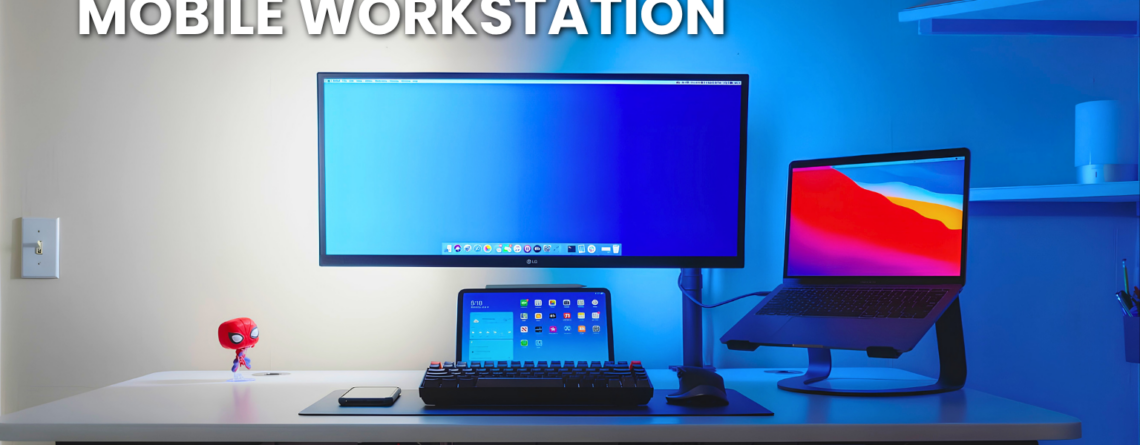
Not every employee needs the same type of computer. Some professionals need a lightweight laptop for meetings, emails, documents, and remote work. Others need a more powerful machine for design, engineering, rendering, data work, or technical applications.
This is where many businesses become confused. Should they buy a standard business laptop or invest in a mobile workstation? Both devices can be useful, but they are built for different types of users.
GTSS HUB offers refurbished Laptops and professional systems that help businesses choose cost-effective devices according to workload, not guesswork. The right buying decision can improve productivity, reduce downtime, and help teams work more comfortably.
What Is a Business Laptop?
A business laptop is designed for everyday professional use. It is usually lightweight, portable, secure, and easy to carry between office, home, client meetings, and travel. Business laptops are best for users who mainly work on emails, documents, spreadsheets, web tools, video meetings, presentations, CRM systems, and basic multitasking.
For example, the Microsoft Surface Pro 7 is useful for professionals who need portability, touchscreen flexibility, and a device that can move between laptop and tablet-style use. It is a good fit for meetings, presentations, note-taking, and mobile productivity.
Business laptops are usually the right choice for sales teams, managers, remote employees, admin staff, students, consultants, and general office users.
What Is a Mobile Workstation?
A mobile workstation is a more powerful laptop-style device built for heavier workloads. It usually has stronger processing power, more memory, better graphics, and higher performance components than a standard business laptop.
Mobile workstations are made for users who run demanding software. This may include architects, engineers, designers, developers, video editors, analysts, and technical professionals. These users may need stronger graphics performance, larger memory, and better processing capability.
A device like the Dell Precision 7770 fits this type of requirement because it is positioned for users who need more than basic office performance.
Business Laptop vs Mobile Workstation: Main Difference
The main difference is workload. A business laptop focuses on portability and daily productivity. A mobile workstation focuses on performance and heavier applications.
A business laptop is usually easier to carry, more affordable, and suitable for general work. A mobile workstation is usually heavier, more powerful, and better for professional software.
If a user only needs Microsoft Office, browser-based tools, video meetings, and email, a workstation may be unnecessary. If a user works with CAD files, 3D models, graphics, rendering, large datasets, or technical software, a standard laptop may slow them down.
Best Choice for Remote Work
For remote work, portability and battery life matter a lot. Employees working from home, coworking spaces, or client locations need a device that is easy to carry and reliable for long work sessions.
A laptop such as the HP EliteBook 840 G7 can be a practical choice for business users because it combines portability, 16GB RAM, SSD storage, and professional features. It is suitable for multitasking, online meetings, office tools, and daily productivity.
For most remote employees, a business laptop is enough. A mobile workstation is only needed when the employee’s role requires heavy software.
Best Choice for Design and Technical Work
Design and technical teams usually need more power. If the employee works with 3D design, engineering software, animation, video editing, architecture tools, or GPU-supported applications, a mobile workstation is usually the better option.
Businesses can also review the Workstations category when they need systems built for professional workloads. These machines are better suited for users who need stability and speed under heavier tasks.
For graphics-heavy work, the GPU also matters. GTSS HUB’s Graphic Card category is useful for buyers who want to understand or upgrade graphics capability in supported systems.
How Businesses Should Choose Devices for Teams
The smartest approach is to divide users by role. Not every employee should get the most expensive device, and not every employee should get the cheapest device.
Admin teams, customer support, sales staff, and managers may only need business laptops. Designers, developers, engineers, and technical teams may need mobile workstations. Executives may prefer lighter systems with strong build quality and security.
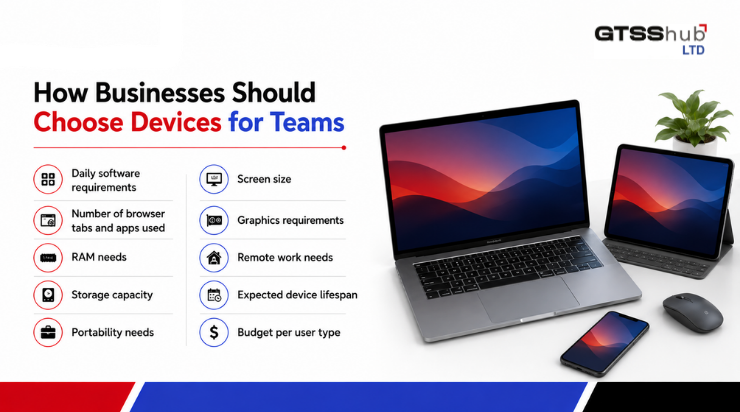
Businesses should check the following before buying:
Daily software requirements
Number of browser tabs and apps used
RAM needs
Storage capacity
Portability needs
Screen size
Graphics requirements
Remote work needs
Expected device lifespan
Budget per user type
This method helps companies avoid both overspending and underbuying.
Why Refurbished Devices Make Sense
Refurbished business laptops and workstations can help companies control IT spending while still giving teams reliable equipment. This is especially useful when a business needs to upgrade multiple employees at the same time.
Instead of buying all-new devices, companies can choose refurbished systems that match each team’s workload. This allows better budget planning and helps businesses provide stronger devices to users who actually need them.
For growing teams, refurbished equipment can be a practical way to improve productivity without increasing hardware costs too quickly.
FAQs
Is a business laptop enough for office work?
Yes, a business laptop is usually enough for emails, documents, spreadsheets, web apps, video meetings, and general productivity.
Who needs a mobile workstation?
Designers, engineers, video editors, developers, architects, and technical users may need a mobile workstation for heavier software and performance-demanding tasks.
Is a mobile workstation better than a laptop?
It is better for heavy workloads, but not always better for general users. A business laptop is usually more portable and cost-effective for daily office work.
How much RAM should a business laptop have?
For modern business use, 8GB can work for basic tasks, while 16GB is better for multitasking and heavier office workflows.
Should businesses buy refurbished laptops?
Yes, refurbished laptops can be a smart option when they are properly tested, reliable, and matched to the user’s work requirements.
Conclusion
Business laptops and mobile workstations are both useful, but they should be bought for the right users. A business laptop is best for portability, office work, and remote productivity, while a mobile workstation is better for design, engineering, graphics, and technical workloads.
If your company is planning to upgrade employee devices without overspending, visit GTSS HUB to explore reliable refurbished technology that fits real business needs.



Leave a Reply